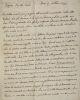
Transcript
Dux 2 xbre 1791
Signor Nipote Carlo
Ho fatto subito jeri pagare all’onorato mercante Sala otto talari che gli dovevo, e ch’egli medesimo politamente mi disse l’anno passato che glieli pagherei al mio ritorno a Dresda, offrendomi ancora altra cioccolata se volevo, onde al vostro solito avete mentito.
Voi mi avete scritto una lettera da pazzo scapestrato impertinente, insolente, e mal onesta, che mai creditore scrisse a debitore, che mai nipote scrisse a Zio. Qual mai fu l’effetto, che la vostra vuota, ed ignorante testa pretese di ritrarre dalle ingiurie che mi dite in quella lettera?, voi che mi avete detto cento volte che non siete sensibile che alle parole, che le bastonate istesse in confronto delle parole vi sembrano carezze, voi che domandandomi à Venezia il mio divin perdono dopo il vostro latrocinio mi diceste un giorno di bastonarvi più tosto, ma di non mai rimproverarvelo. Ed io né vi rimproverai, né vi bastonai, né vi feci mettere in una fortezza, come vostro padre mi scrisse che dovevo fare, ma vi perdonai, e non vi rimprovero adesso la vostra infamia che per la cagione che la temerità con cui mi scriveste mi dimostra che ve la siete dimenticata. Ditemi, se eravate ubbriaco, quando mi avete scritto quella lettera, e vi accorderò il divin perdono che domandereste fino alla morte, che otterreste sempre, senza profittarne mai. Volete che vi rimandi la vostra impertinente lettera, che mi ha fatto tanto ridere? Ve la rimanderò: rispondetemi. Spero che rileggendola avrete quella vergogna che, impudente, non avete avuto a scrivermela.
Alla mia partenza da Dresda in Agosto dell’anno scorso vi dovevo (se non sbaglio) quaranta talari. Appena arrivato qui in Dux ve ne mandai venti. Dunque restano venti, e se fossero di più non negherò il mio debito tanto più che dite, cosa della quale non mi ricordo, che vi ho fatto una cambiale. Sappiate che un uomo onesto possessore di una cambiale non ha il dritto di dire ingiurie al debitore: il solo dritto che ha è quello di fargliela presentare nelle regole, e di procedere secondo le tranquille regole della giustizia, se non la paga. Fate dunque così ancor voi. Feci l’anno passato a Dresda due cambiali al mercante da panni, le mandò qui alla scadenza, e ventiquattr’ore dopo le pagai. Voi dunque, che volete far il mestiere di mercante, imparate a farlo con le leggi civili dell’onestà. Non sarà mai vero, povero nipote mio, che il denaro che io posso dovervi, abbia ad esser cagione che scappiate un altra volta da Dresda. Prima di arrivare a quest’eccesso gettatevi un’altra volta à piedi di vostro padre, domandategli il divin perdono, ed astenetevi dal dargli maggior afflizione, preparandovi però a ricevere con animo compunto la paterna correzione in parole, e vergognatevi alla fine di dire che preferite le bastonate, linguaggio di Galeotto, che sembra d’eroe alla vostra testa matta.
Andate dunque domani dal Signor Sala, portategli la cambiale che qualifica il mio debito, pregatelo di mandarla a Toeplitz al suo corrispondente, ed io quando l’avrò veduta la ritirerò pagandola, e così non avrete più ragione alcuna di dirmi ingiurie.
Non crediate che per questa vostra stramberia io sia in colera con voi—No. Spero che ne siate già pentito, e voglio finire la mia lettera, dandovi un buon consiglio. Eccolo.
Cambiate di condotta avanti che vostro padre paghi alla natura il grande inevitabil debito, o prevedetevi miserabile fino alla morte. Cominciate intanto a disporvi di palesargli tutti gl’imbrogli in cui vi siete immerso, e che mi son noti. Dio vi benedica.
Sono sempre con verità
Vostro affettuosissimo Zio
Giacomo
[Direction:] A Monsieur | Monsieur Charles Casanova | Au troisieme étage de l’hôtel de Saxe | à Dresde
—————
Translation
Dux [Duchcov], 2 December 1791
Mr Nephew Carlo,
Yesterday I had the eight thalers paid at once that I owed to the respected merchant Sala. Last year he himself told me politely that I could pay him when I returned to Dresden, and he offered me more chocolate if I wanted it. So as usual you’ve lied.
You’ve written me the letter of a reckless madman, impertinent, insolent, and dishonest, such as no creditor ever wrote to a debtor and no nephew to an uncle. Whatever did your empty and ignorant head expect to accomplish with the insults in that letter? You who have told me a hundred times that you’re sensitive only to words and who said that compared to words a beating would seem like caresses to you; you who begged my ’divine forgiveness’ in Venice after you stole; you who once told me to beat you rather than reproach you. And I didn’t reproach you, or beat you, or have you locked up, as your father wrote to tell me I should, but I forgave you; and I’m not reproaching you now for that disgraceful action, since the audacity in your letter shows that you’ve forgotten all about it. Tell me, were you drunk when you wrote that letter? If so, I will grant the ’divine forgiveness’ you’re asking for right up until death, and you’ll always receive it without my taking advantage of it. Do you want me to return the impertinent letter that made me laugh so hard? I’ll return it; just let me know. When you reread it I hope you’ll feel the shame that you didn’t feel when you were writing it.
When I left Dresden in August of last year, I owed you (if I’m not mistaken) forty thalers. As soon as I arrived here in Dux I sent you twenty. So there’s still twenty, and if it’s more than that I won’t deny whatever you tell me it is; I don’t remember having given you a promissory note. You should know that an honest man who has a promissory note has no right to insult his debtor. The only right he has is to make him pay according to the rules, and if he doesn’t do that, to proceed peacefully in accordance with rules of justice. Then do so. In Dresden last year I gave two promissory notes to the clothing merchant, who sent the clothes when they were ready, and I paid him twenty-four hours later. You therefore, who want to become a merchant, should learn to do likewise, in accordance with civil law. It can never be, my poor nephew, that money I owe you should be the reason you flee from Dresden again. Before you go to that extreme, throw yourself once more at your father’s feet, beg him for his ’divine forgiveness’, and refrain from giving him greater affliction. Be prepared, however, to receive paternal correction with a contrite mind, and lastly, be ashamed to say you would rather be beaten. That’s the language of a galley slave, though it seems heroic to your crazy head.
So go to Mr Sala tomorrow, take him the promissory note that records my debt, and ask him to send it to his correspondent in Toeplitz. When I’ve seen it I will remit payment, and then you won’t have any reason to insult me further.
Do not believe that I’m angry at you for your strange behaviour. No, I hope you’ve already regretted it, and I want to end my letter by giving you some good advice. Here it is:
Alter your conduct before your father pays the great inevitable debt to nature, or I foresee that you will be wretched until your own death. Meanwhile prepare to reveal to him all the imbroglios you’ve gotten into, which are well known to me. God bless you.
I am always truly
Your most affectionate uncle,
Giacomo
[Direction:] To Mr | Mr Charles Casanova | Third Floor, Hôtel de Saxe | Dresden