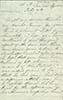
On the front is stamped ‘ORIGINAL DOCUMENTS & PAPERS.’ The documents are accompanied by folded sheets of blue paper bearing descriptions of the documents, in which they were evidently kept before they were bound.
Sandars, Samuel (1837-1894), librarian and benefactorMinutes for May Balls from 1949 to 1963, with additional reports of meetings of the Joint May Balls Committee, and a few cuttings from newspapers mentioning the Trinity May Ball. Minutes are signed by Hon. Secretaries John A. N. Graham, Roger S. Money-Kyrle, Alan F. Niekirk, George Nissen, Malcolm Gomme-Duncan, Alan C. C. Vincent with assistance from Malcolm Davidson, Russell Carver, John R W. Pardey, Peter A. Drake, Ian N. Hardy, Willie Marsden, and Martin C. Clarke.
On the spine is stamped ‘DECLAMATIONES | — | TRIN. COLL. CANTAB. | TOM. | I. | 1799–1809’, and inside the front cover is written, ‘Declamationes in Coll. S.S. Trinitatis Cantabrigiae | habitae | Tomus. I. | 1799–1809’. The dates in these titles do not match those of the contents. The manuscripts in the volume appear to be autograph.
Renouard, John Henry (1758–1830), college teacherIncludes letters by J. O. Halliwell, J. M. Heath about the August 1846 storm in Cambridge, H. Montagu Butler about a bust of Archdeacon Hare, Vernon Musgrave about a memorial to Archbishop Musgrave, with a draft from William Whewell to Vernon Musgrave.
Wright, William Aldis (1831-1914), literary and biblical scholarOn the fly-leaf are some lines of poetry partly pencilled and then inked over, partly in ink originally. On the fly-leaves at the other end are further fragments in ink and pencil, and one is headed: ‘Plan of a Poem. The Seasons. | Spring. The Visitation, &c.’ Other verses in pencil are on blank pages in the body of the volume, which consists of botanical notes, predominantly on fungi. At the other end is the date 23 Sept. 1793.
Crabbe, George (1754-1832), poet and Church of England clergymanMostly printed. Also including several pieces by Richard Shilleto.
Collected by William Hepworth Thompson?
A collection of some of the printed material and letters received by Whewell between 1819 to 1833, of which the materials relating to the Cambridge elections of 1829 and 1830 form a part.
Whewell, William (1794-1866), college head and writer on the history and philosophy of scienceTwo letters relating to observations of tides.
Germar, Friedrich Heinrich (1776-1859) theologianInforms her that they have posts there [in Keswick] occasionally, if she wishes to write. Writes a list of 'pros and cons' in relation to their accommodation. Concludes that on the whole 'it is the best situation in Borrowdale: and therefore in the English Lakes: and therefore, for short mountain walks, in the World'. Admits to not liking the scenery as much as he did three years previously, and thinks that neither does William, but concedes that the scenery is beautiful.
Reports that they have met Edmund Fisher and his wife, 'who is nice and prettyish'. Announces that he reviewed a poem called Ludibria Lunae in the Spectator. It is a satire on the efforts to emancipate women from their subjection, and he claims to have tried to be as stinging as he could, without showing that he had lost his temper. Announces that they expect [G. O.] Trevelyan soon, and that he is to be married on 24 September. Reports that William 'does not seem unwell particularly', but his sleeping has not improved as much as they had hoped. Sends his love to Edward and the children. Asks if she heard that F[rederic] Fisher was engaged to his Bishop's daughter [Agnes, daughter of the Bishop of London, John Jackson].
Announces that he is going to Cambridge 'on the 3rd', and is thinking of going to visit her for a night or two 'after the 11th and before the 18th if convenient.' Remarks that the Rugby news was a shock, and states that he ceases to advise acquiescence [a reference to the troubles with the head, Henry Hayman?]. Reports that Arthur was skating on the Downs.
10 Scrope Terrace (Cambridge).—Accepts an invitation, and cites a passage from the Persian poet Kháqání to illustrate the reference to a gourd in the book of Jonah.
—————
Transcript
10 Scrope Terrace
Oct. 29. 1884
My dear Aldis Wright,
Thank you for your kind invitation for next Saturday, which I shall have great pleasure in accepting.
I came on a passage in a poem of the Persian poet Kháqání (which I read while I was at Broadstairs in the vacation)—which may interest you as illustrating Jonah’s “gourd” qîqâyon {1}.
“If to spite the graceful planetree
The ricinus-shrub springs from the ground,
Those who are intelligently practical
Know the ricinus from the plane.
The one will extend its years of life to an hundred,
The other will not last more than three or four months.”
The Persian bîd-anjîr or “willow-fig” is explained in the Dictionaries as “the shrub Palma Christi”.
Yours sincerely
E. B. Cowell
—————
{1} Cf. Jonah iv. 6-10. ‘qiqayon’ is the word used for the plant in the original Hebrew.
From a press cutting bureau. The article cites Frazer's 'Golden Bough'.
Conduit Head, Madingley Road, Cambridge - Thanks her for the Downie biography; has given his car to the firemen and rarely leaves the house; was excited to learn that 'Drink to me only' is from Philostratus.
Trinity College - Thanks him for his kind words, and feels that he is simply doing his duty; 'This life of study and research is my ideal life' and is grateful to the College for enabling him to pursue it.
62 Bolingbroke Road, W.14. - Thanks the Frazers for the copy of the 'Fasti', which he admires.
Prades. - He understands the joy she takes in her nephew's company: Joachim is 'un garcon et un artiste de premiere ordre', and strongly resembles his father. His feeling for the [Prades] Festival, and his collaboration, are very important to Casals. Is happy about the arrangement for Robert Trevelyan's library [at Birkbeck College, London], it is just the right tribute to his memory. His compatriot Corredor is preparing a book of conversations with him: Röntgen, Tovey and Moór will figure as both great musicians and friends. Thinks Corredor will strike the right note. He is in the middle of preparations for the festival; many of the musicians have already arrives. Knows she would enjoy the music and the atmosphere.
Harnham, Monument Green, Weybridge. - Has heard from Miss V. W. [Vaughan Williams] about Trevelyan's accident at the Pageant: hopes he has recovered. Asks where Paul's 'playground' was purchased, as he would like to buy one for [Hugh Owen] Meredith's children. Returns two books, and his 'silly Dante paper'. 'Miss Bartlett' ["A Room with a View" has been rejected by the USA. Visits Meredith next week, then Mrs Hope Wedgwood; goes to Abinger next and on the 5th September may join [Goldsworthy Lowes] Dickinson in Italy. Wishes that Trevelyan could come too. Is reading Marco Polo, inspired by Masefield's introduction.