
Crewe MS/24B/f. 3r
·
Parte
·
1656
Parte de Crewe Manuscripts
4485 resultados con objetos digitales
Muestra los resultados con objetos digitales
Crewe MS/10/f. 3r
·
Parte
Parte de Crewe Manuscripts
First line: ‘Fine Women are delicate things’.
—————
Transcript
A Dialogue between two Brothers
Fine Women are delicate things
The Comfort and Joy of Man’s Life
Companions for Nobles and Kings,
Then who would but have a good Wife
Brother Billy O what do you mean?
Are not Women the Authors of Strife,
Many desperate Snares have I seen.
Then who would be plagu’d with a Wife?
When a Man’s incumber’d with Care
She’ll help for to Nourish his Life:
And part of the Burthen she’ll bear.
Then who would but have a good Wife
But they’ll plunder my silver and Gold
And ramble abroad to the life
Besides they are give to Scold,
Then who would be plagued with a Wife
Oh! why do you covet your wealth
It will bring you to sorrow and Strife
When you came of a Woman yourself
Then why should you hate a good Wife
I hate not a Woman he cryed
But O the sad Name of a Wife
I cannot endured† to be tyed
To Sorrow all Days of my life
Besides they have flattering tongues
They’ll Cousin a Man out of his Life
Ah! and Cuckold us when we are young
The[n] who would be plagued with a Wife
Crewe MS/50/f. 3r
·
Parte
·
c. Mar. 1753
Parte de Crewe Manuscripts
O./15.67/f. 3r
·
Parte
Parte de Manuscripts in Wren Class O
Crewe MS/20/f. 3r
·
Parte
·
11 July 1713
Parte de Crewe Manuscripts
‘Nihil agendum quod actum nollemus novissime.’ Dated at Leiden.
Crewe MS/21/f. 3r
·
Parte
·
24 Jan. 1708
Parte de Crewe Manuscripts
Acknowledges the receipt of forty guineas for the copyright of a poem (by Philips) entitled Cyder, in two books. A memorandum by Tonson dated the same day records that ‘Mr Phillips is to have ten Guineas more upon a Second Edition’.
R./1.1/f. 3r
·
Parte
·
c. 1598
Parte de Manuscripts in Wren Class R
Add. MS a/793/f. 3r
·
Parte
·
July 1862
Parte de Additional Manuscripts a
The sketch is captioned ‘This is what is called the “Groom”’.
Crewe MS/48/f. 3r
·
Parte
·
21 Nov. 1822
Parte de Crewe Manuscripts

Add. MS a/655/f. 3r
·
Parte
·
c. 1886
Parte de Additional Manuscripts a
Probably a commercially-produced print. Captioned below by hand, ‘South Side I. | Evangelists & Teachers.’
Of a similar date to the photograph on f. 2r.
Add. MS a/718/f. 3r
·
Parte
·
1868
Parte de Additional Manuscripts a
Information on most of the seniors added in MS notes beside the pasted-in sheet. 'The Master' is written, rather than Thompson's proper name.
Crewe MS/50/f. 39v
·
Parte
·
18 Aug. 1775
Parte de Crewe Manuscripts
(Dated ‘[th]e Aug Fridy 1875’ (sic) and postmarked 21 Aug. Docketed ‘Aug[u]st [th]e 18–75’.)
Crewe MS/20/f. 39r
·
Parte
·
12 Oct. 1711.
Parte de Crewe Manuscripts
‘Thiologi, non Theologi, quorum sensa, verba et facta ὁ τοῦ Θεοῦ λόγος per fidem inhabitans vivaci influxu non animat.’ Dated at Amsterdam. Numbered 79.
Crewe MS/48/f. 39r
·
Parte
·
17 Sept. 1826
Parte de Crewe Manuscripts
Add. MS a/793/f. 39r
·
Parte
·
25 Aug. 1863
Parte de Additional Manuscripts a
The sketch is captioned ‘A certain specific against quaking flopping snoring smelling & all other canine diseases’.
Crewe MS/24B/f. 39r
·
Parte
·
1727
Parte de Crewe Manuscripts
Crewe MS/50/f. 39r
·
Parte
·
6 May 1773
Parte de Crewe Manuscripts
(Dated ‘March [th]e 1753 [sic] | Wendsday Night 9 cClock’. Two messages, the second of which was added as a postcript.)
Crewe MS/2/f. 39
·
Parte
·
Apr. 1739
Parte de Crewe Manuscripts
Crewe MS/21/f. 39
·
Parte
·
6 June 1744
Parte de Crewe Manuscripts
Acknowledges that Jacob and Richard Tonson are entitled to one moiety of the copyrights of Dr Parnell’s Poems and a play called Chit-Chat, by Killigrew, which have previously been printed with Lintot’s name alone as proprietor; and promises that the Tonsons' names will appear as proprietors in future editions. ‘The Battle of the Frogs and Mice’ he claims as entirely his own, except when it is printed with the rest of Parnell’s Poems.
Add. MS a/793/f. 38v
·
Parte
·
25 Aug. 1863
Parte de Additional Manuscripts a
The sketch is captioned ‘The Brigands who attacked Tyndall & Huxley at Langdale.’
Crewe MS/24B/f. 38r
·
Parte
·
1802
Parte de Crewe Manuscripts
(For the identity of the author see W. C. Newsam and J. Holland, The Poets of Yorkshire (1845), pp. 121–2.)
Crewe MS/20/f. 38r
·
Parte
·
16 Apr. 1667
Parte de Crewe Manuscripts
‘In foraminis Petræ quiesco.’ Dated at Nuremberg.
Add. MS a/793/f. 38r
·
Parte
·
25 Aug. 1863
Parte de Additional Manuscripts a
The sketch is captioned ‘Singular amusement of a certain learned professor.’
Crewe MS/50/f. 38r
·
Parte
·
Mar. 1753
Parte de Crewe Manuscripts
(Dated ‘March [th]e 1753 [sic] | Wendsday Night 9 cClock’. Two messages, the second of which was added as a postcript.)
Crewe MS/48/f. 38r
·
Parte
·
5 Sept. 1826
Parte de Crewe Manuscripts

Crewe MS/8/f. 38r
·
Parte
·
1851
Parte de Crewe Manuscripts
Crewe MS/2/f. 38
·
Parte
·
29 Apr. 1738
Parte de Crewe Manuscripts
Crewe MS/21/f. 38
·
Parte
·
18th c.
Parte de Crewe Manuscripts
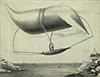
Crewe MS/8/f. 37v
·
Parte
·
c. 1851
Parte de Crewe Manuscripts
A model of this balloon was exhibited by Luntley at the Great Exhibition of 1851 (see the Official Descriptive and Illustrated Catalogue, ii. 435: Class 10, No. 237). This print has no caption, but the copy in the Library of Congress is captioned ‘ROTARY BALLOON. Model exhibited in Class X, No. 137 [sic]. By J. Luntley.’
Add. MS a/718/f. 37v
·
Parte
·
28 May 1847
Parte de Additional Manuscripts a
Re money going missing from a letter sent by Ann Sutton, a woman in Rising's service.